Redesigned a healthcare SaaS funnel that increased conversion by 46%

Role

Solo Product Designer (UX/UI)

Collaboration

PM, researchers, marketing team

Duration

3 months

Context

| Traffic Without Conversion

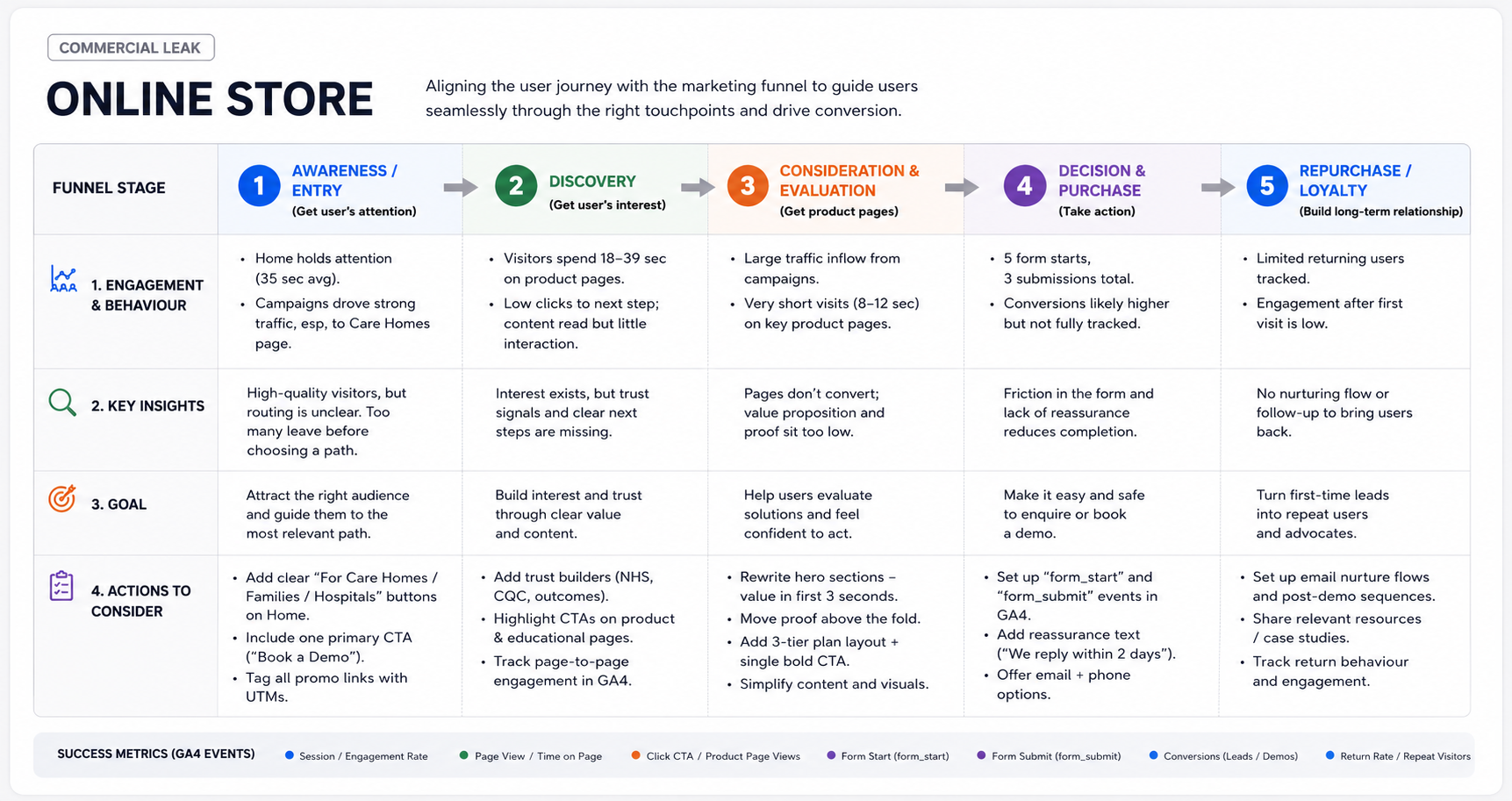
A healthcare SaaS platform was getting the traffic, running the campaigns, but not converting. Visitors were landing and leaving.

I was brought in as the product designer to find out why and fix it, working across marketing and stakeholders to turn a leaking funnel into a performing one.

The platform served three distinct audiences, including care providers, hospitals, and families, each with different needs and different levels of trust. Getting the experience right wasn’t just a conversion problem. It was a clarity and trust problem, and that made the design work genuinely complex.
Opportunity

The core issue was not attracting users,

it was converting them.

The experience overwhelmed users with options, unclear navigation, and content-heavy pages, making it difficult to decide where to go next or feel confident enough to take action.
  • Two-thirds of visits landed directly on the Care Homes page, yet users spent an average of just 12 seconds there
  • It indicates that Users were hesitating to act due to unclear direction and a lack of trust signals. 
  • Across roughly 1,000 sessions, only 3 lead submissions were completed.
  • The drop-off was sharp, consistent, and happening at exactly the moments that mattered most.
Strategy

Trust First, Conversion Second

I reframed the problem from a traditional “marketing funnel” to a user-guided journey, focusing on reducing friction and building trust before asking users to convert. In healthcare, trust isn't a nice-to-have; it's the conversion mechanism. The strategy rested on three principles:

Guide users clearly through the funnel

Align user journeys with business conversion paths, reducing ambiguity and drop-offs.

Reduce cognitive overload

Simplify navigation, messaging, and page structure to help users make decisions faster.

Build trust early

Introduce proof points, clear value propositions, and reassuring messaging within the first interaction.

Methods

Combined funnel analytics with UX journey

Identified where users hesitate vs. act
  • Engagement metrics (time, drop-offs)
  • Entry source analysis (campaign vs organic)
  • Page-to-page transitions

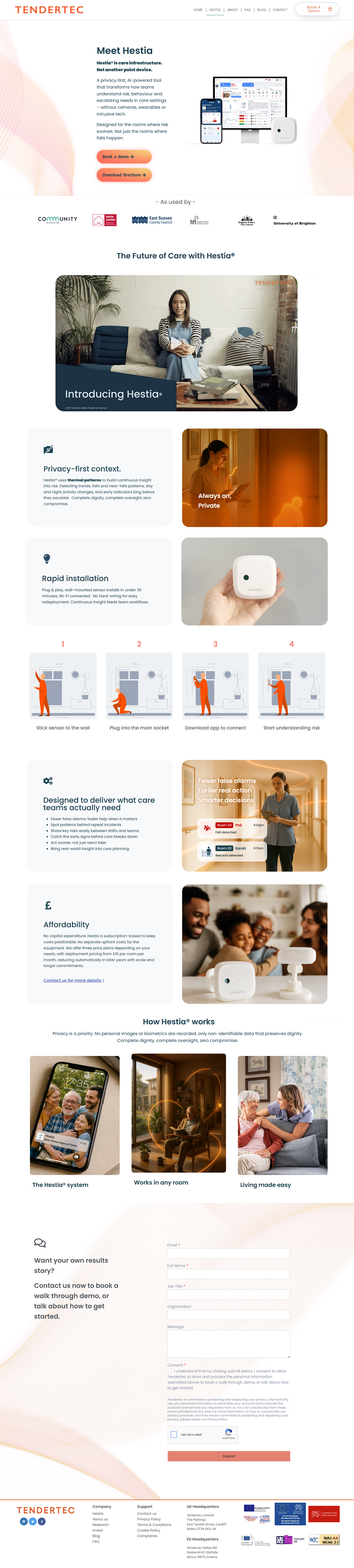
| From there, I redesigned three critical surfaces:

  1. Homepage (trust and entry points)
  2. Product pages (value and use case clarity)
  3. Forms (reduced friction, added reassurance

I also work with marketing team to define a GA4 measurement framework, tracking form_start, form_submit, and CTA clicks. So the business could see conversion performance clearly for the first time.

Outcomes

The redesign delivered across every metric that mattered:

  • Conversion rate up 46%
  • Engagement up 70% (time on page and interactions)
  • Higher lead quality, with more qualified demo requests
  • Reduced drop-off at key decision pages
  • Increased CTA click-through rates
  • First clear attribution of lead sources via tracking setup
Scroll to Top